This glossary is together with the signal processing stuff where we are going to put words that we cannot understand.
Analog frequency
noun
It's an electrical signal, the voltage, current, or frequency of the signal may be varied to represent the information.
Example: Analog frecuency are Human voice, Thermometer, Analog phones etc. Examples of digital signals are Computers, Digital Phones, Digital pens, etc.
en: Frecuencia analógica
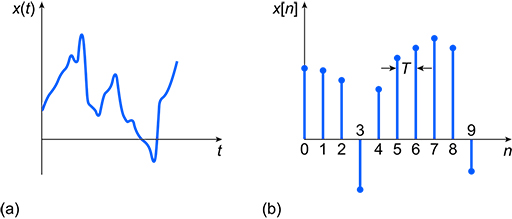
Continuous-Time signals
noun
A continuous-time (CT) signal is a function, s(t), that is defined for all time t contained in some interval on the real line. For historical reasons, CT signals are often called analog signals.
Example: If a signal is defined at all values of t where t is a continuous variable, this is known as a continuous time signal. Is known as continuous time signal.
en: Señales de tiempo continuo
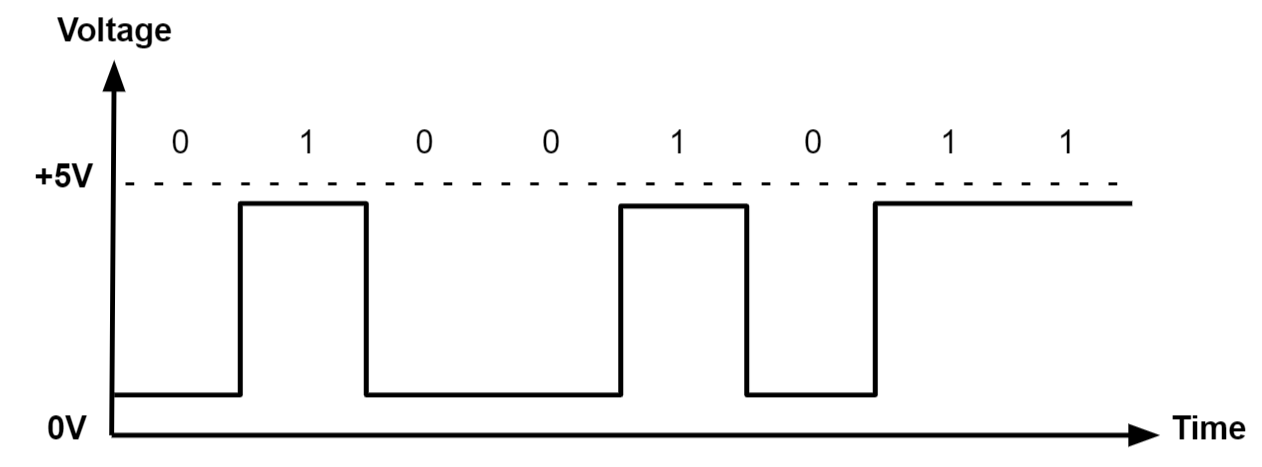
Digital signal.
noun
A digital signal is a signal that is being used to represent data as a sequence of discrete values; at any given time it can only take on, at most, one of a finite number of values.
Example: A binary signal, also known as a logic signal, is a digital signal with two distinguishable levels.
en: Señal digital.
Discrete-amplitude
noun
Discrete in amplitude means signal cannot have multiple amplitude values .
Example: Discrete amplitude is one which we get through quantization process and it depends how many levels of quantization one wants.
en: Amplitud discreta
Discrete-Time signals
noun
Unlike a continuous-time signal, a discrete-time signal is not a function of a continuous argument; however, it may have been obtained by sampling from a continuous-time signal.
Example: For discrete-time signals, we obtain definitions for energy and power similar to those for continuous-time signals by replacing integrals by summations.
en: Señales de tiempo discreto
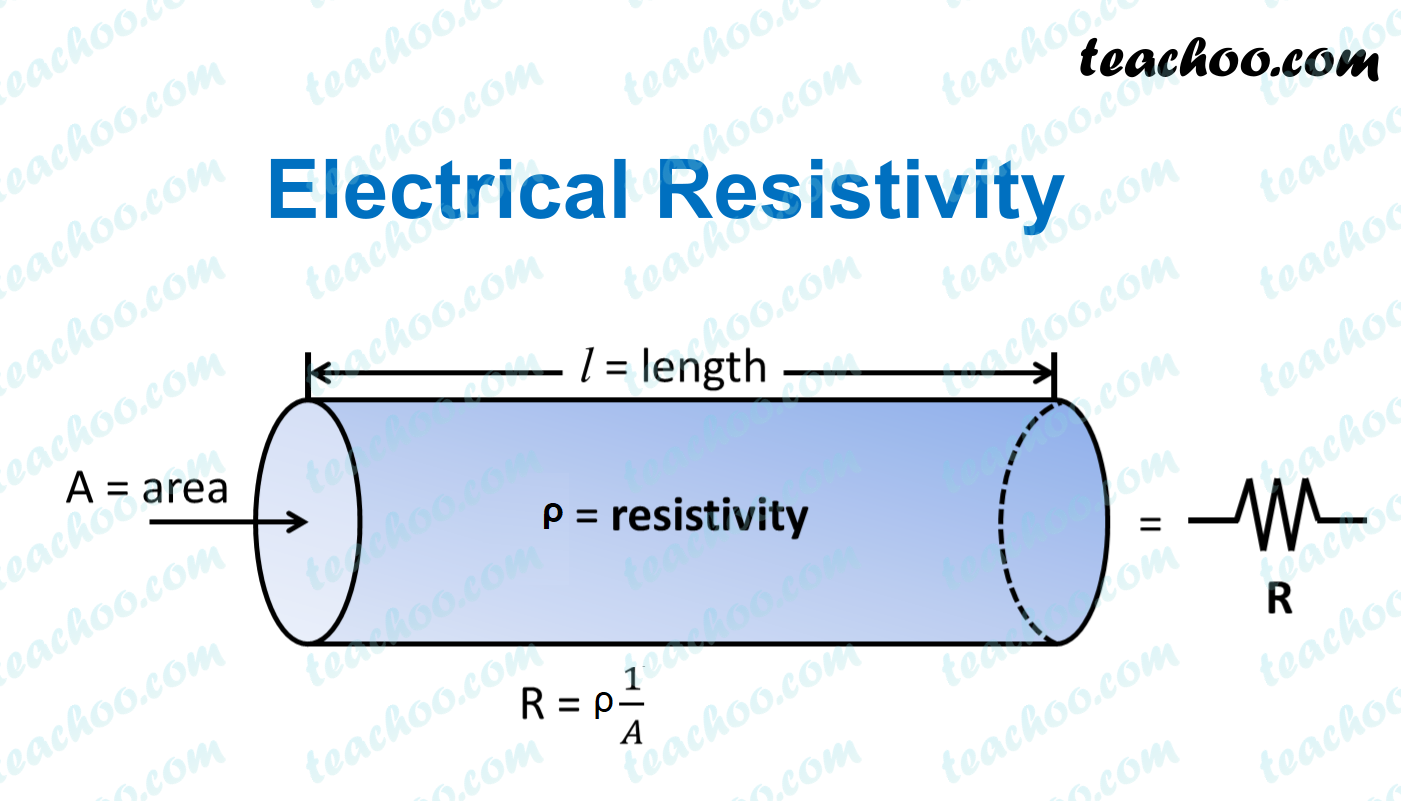
Electrical resistivity
noun
Electrical resistivity is a fundamental property of a material that measures how strongly it resists electric current. Its inverse, called electrical conductivity, quantifies how well a material conducts electricity.
Example: The electrical resistivity of a material is defined as the resistance offered to current flow by a conductor of unit length having unit area of cross
en: Resistividad electrica
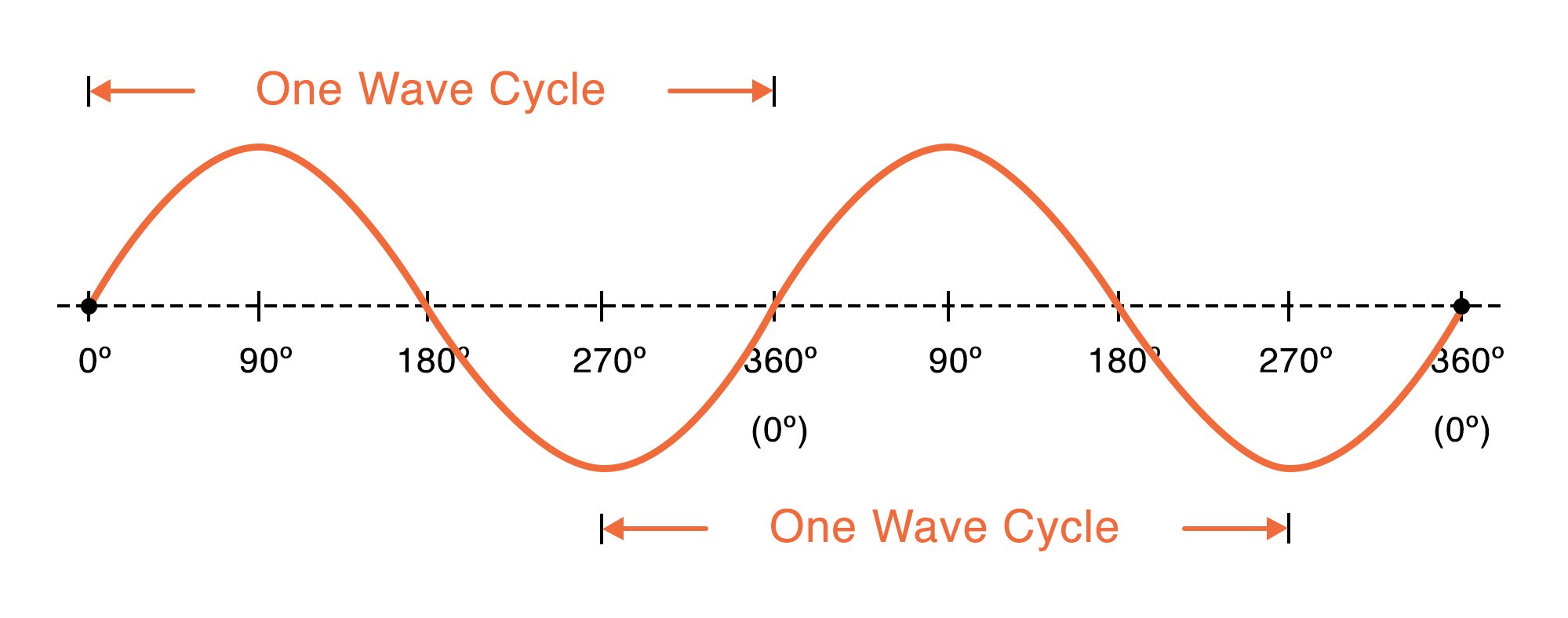
Real sinusoidal sequence
noun
A compound sinusoidal sequence can be identified by repeating spectral peak selection from the interpolated spectral sequence iteratively independent of the observation length, provided the sinusoidal components are time independent.
Example: Can be used to estimate signal model parameters directly by fitting of samples in a N-size record.
en: Secuencia sinusoidal real
Signal energy
noun
A signal can be categorized into energy signal or power signal: An energy signal has a finite energy, 0 < E < ∞. In other words, energy signals have values only in the limited time duration.
Example: A signal having only one square pulse is energy signal.
en: Energía de señal
Signals
noun
Is a function that conveys information about a phenomenon. In electronics and telecommunications, it refers to any time varying voltage, current, or electromagnetic wave that carries information.
Example: There is a discontinuous representation of signals in digital signals.
en: Señales
Spatial variables.
noun
A spatial variable is a variable (usually x,y,z or x1,x2,x3 etc) that describes a spatial dimension.
Example: A symbol, esp x, y, or z, representing an unspecified member of a class of objects, numbers, etc. See also dependent variable, independent variable and spatial variable.
en: Variables espaciales.
Systems
noun
A system is a group of interacting or interrelated elements that act according to a set of rules to form a unified whole.
Example: The isolated system does not exchange energy or matter with the surrounding environment.